
What is eaten or drunk?
Choose the finished product, not simply the ingredient given most prominence on the pack.
EntriesEntries are not open at the moment.
Product categories
Choose the category that matches the product people actually eat or drink.
Each category explains what belongs there, how the sample is prepared, what assessors pay attention to and which nearby categories may be a better fit.
A practical starting point
Three questions normally identify the right route. They keep the choice focused on the product being tasted rather than its packaging or claims.
Choose the finished product, not simply the ingredient given most prominence on the pack.
Include brewing, heating, chilling, diluting or cooking when preparation changes the experience.
Use the structure that carries the experience: bread, sauce, drink, protein, dessert or complete dish.
Different products need different preparation
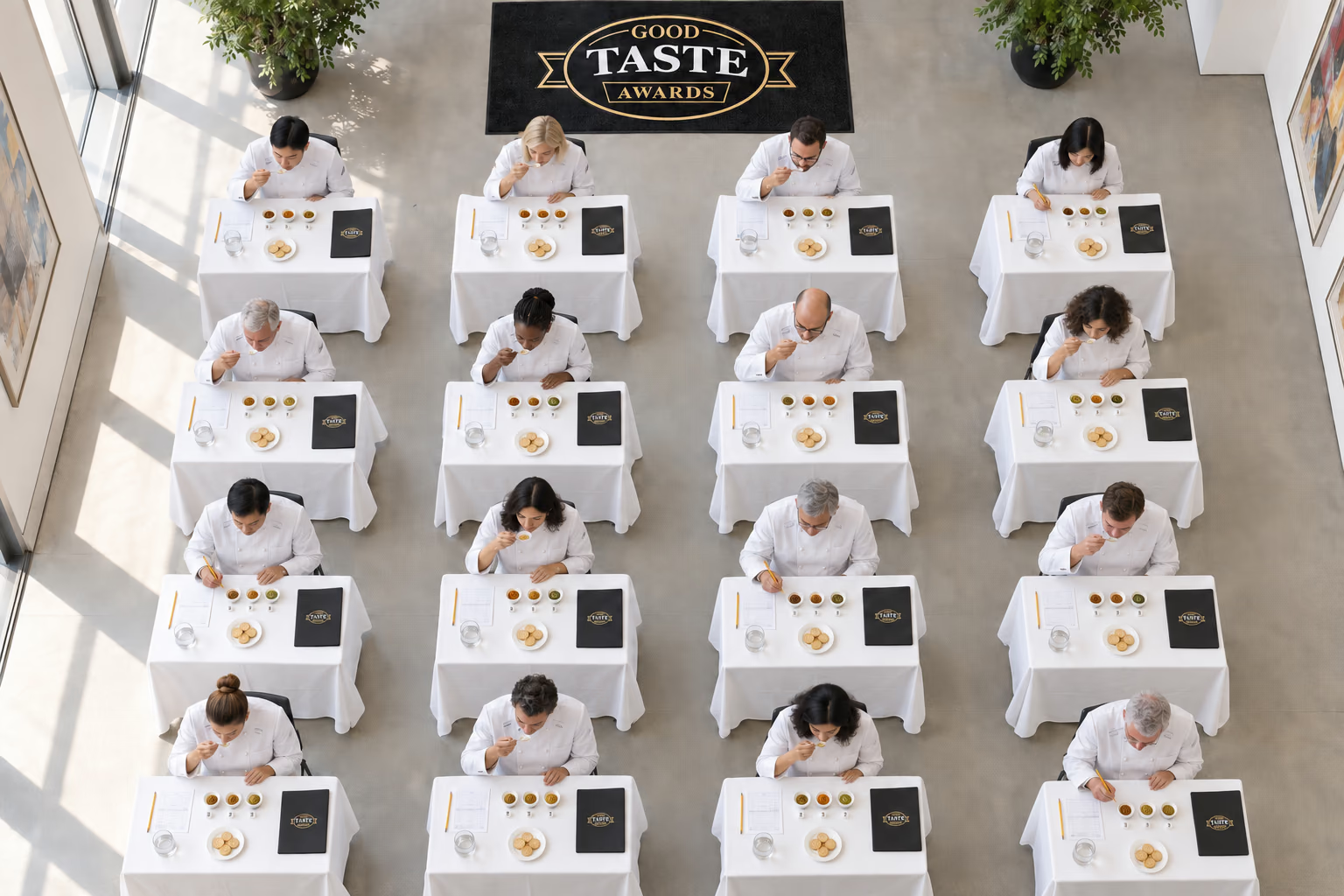
The star scale stays the same. What changes is the defined route used to prepare, portion and serve the product fairly.
Ready-to-eat solids are served in a stable ordinary condition as representative natural units or complete bites.
Fresh produce is selected and divided through a balanced plan that controls ripeness, natural variation, and cut-surface change.
Baked products are portioned to preserve the relationship among crust, crumb, layers, filling, and surface elements.
Melt- and humidity-sensitive pieces are served in a condition that preserves their intended snap, melt, chew, aeration, or crunch.
Semi-solid products are served directly where meaningful and retain intentional layers, pieces, crystals, or separation unless ordinary use calls for mixing.
Concentrated products are expressed through a defined low-interference carrier, dilution, or cooked application that reflects ordinary use.
Oils and fats are served in small defined portions at a state that reveals intended aroma, coating, melt, and finish.
Prepared drinks use a recorded water, ratio, time, temperature, extraction, and service sequence.
Still ready-to-drink liquids are conditioned, opened, poured, and served consistently without material preparation.
Carbonated drinks are opened and poured in defined waves so gas level, volume, and headspace remain comparable.
Fermented alcoholic drinks use defined temperature, opening, aeration, sediment handling, portion, and cumulative exposure.
High-alcohol drinks use small consistent pours, defined dilution only where integral, and explicit exposure and recovery controls.
Temperature-sensitive products are served in timed waves at a defined temper, thaw, or melt state.
Single-component products are cooked or reheated through a defined endpoint and portioned across meaningful natural variation.
Composite dishes are prepared and portioned so every assessor receives the intended relationship of their meaningful components.
Browse the complete directory
Search by product name, family or assessment method. Each category page gives the complete serving and tasting guidance.
24categories shown
Edible products in which honey or another apicultural food remains the principal tasting identity.
Assessment method: Viscous, Semi-Solid and Spreadable ProductRead category guidance Natural and Preserved FoodsFruit, vegetables, fungi, and edible plant products presented fresh or with only preparation that preserves their fresh sensory identity.
Assessment method: Fresh ProduceRead category guidance Natural and Preserved FoodsSweet preserves, table syrups, and sweet spreads whose principal experience is spoonable, pourable, spreadable, gelled, pulped, piece-containing, or concentrated sweetness with a recognisable ingredient identity.
Assessment method: Viscous, Semi-Solid and Spreadable ProductRead category guidance Natural and Preserved FoodsFruit, vegetables, fungi, and related plant foods preserved in juice, brine, syrup, oil, acid, or their own fermented medium while retaining a recognisable ingredient or piece identity.
Assessment method: Ambient Direct SolidRead category guidance Natural and Preserved FoodsConcentrated aromatic, pungent, salty, or flavour-building products intended to season food rather than be consumed as a normal portion on their own.
Assessment method: Concentrated Seasoning and Defined CarrierRead category guidance Grains, Bakery and SnacksBread-led products and grain inputs whose intended identity is expressed through a baked staple or a standard bake prepared from the submitted mix.
Assessment method: Baked, Crumb and Laminated StructureRead category guidance Grains, Bakery and SnacksSweet or lightly savoury baked products in which crumb, lamination, snap, filling, or baked richness defines the eating experience.
Assessment method: Baked, Crumb and Laminated StructureRead category guidance Grains, Bakery and SnacksChocolate, sugar confectionery, and sweet pieces whose pleasure depends on flavour release, melt, chew, snap, aeration, or filling balance.
Assessment method: Crisp, Coated and Melt-Sensitive PiecesRead category guidance Grains, Bakery and SnacksPortionable snack foods and breakfast cereals whose identity is expressed through direct eating or a simple declared cereal service, including crisp, puffed, roasted, clustered, extruded, dried, flaked, or bar-shaped products.
Assessment method: Ambient Direct SolidRead category guidance Grains, Bakery and SnacksStaple grain, pasta, noodle, pulse, and grain-like products assessed after careful cooking, rehydration, or preparation.
Assessment method: Cooked Single-Component ProductRead category guidance Dairy, Fats and CondimentsDairy and non-dairy products presented and consumed primarily as cheese, with texture, maturation, salting, and flavour release central to the experience.
Assessment method: Chilled, Frozen or Tempered ProductRead category guidance Dairy, Fats and CondimentsPourable, spoonable, cultured, creamy, or dairy-style foods whose primary identity is milk-like, yogurt-like, cream-like, or cultured rather than cheese or dessert.
Assessment method: Chilled, Frozen or Tempered ProductRead category guidance Dairy, Fats and CondimentsSweet desserts served chilled, frozen, semi-frozen, or at a defined softened state where temperature strongly shapes flavour and texture.
Assessment method: Chilled, Frozen or Tempered ProductRead category guidance Dairy, Fats and CondimentsEdible oils and fats whose aroma, flavour, coating, melt, and finish are assessed as the principal product experience.
Assessment method: Oil and FatRead category guidance Dairy, Fats and CondimentsProducts used to season, coat, dip, dress, accompany, or spread, including acid, savoury, fermented, emulsified, and concentrated forms.
Assessment method: Concentrated Seasoning and Defined CarrierRead category guidance Non-Alcoholic BeveragesDry, concentrated, portioned, or prepared products whose intended identity is revealed through brewing, infusion, extraction, dissolution, or a declared prepared serving.
Assessment method: Brewed, Extracted or Reconstituted DrinkRead category guidance Non-Alcoholic BeveragesStill or sparkling drinking water in which water character, mineral impression, cleanliness, texture, and finish are the principal experience.
Assessment method: Still Non-Alcoholic LiquidRead category guidance Non-Alcoholic BeveragesNon-alcoholic liquids served without material preparation, including still, carbonated, juice-led, fermented-style, energy, sports, and mixer products.
Assessment method: Still Non-Alcoholic LiquidRead category guidance Alcoholic BeveragesGrape and other wine-style drinks whose identity centres on vinous aroma, acidity, sweetness, tannin or phenolic structure, alcohol integration, and finish.
Assessment method: Fermented Alcoholic DrinkRead category guidance Alcoholic BeveragesFermented alcoholic drinks whose enjoyment depends on fermentation character, malt, grain, fruit, botanical, acidity, bitterness, carbonation, body, and finish.
Assessment method: Fermented Alcoholic DrinkRead category guidance Alcoholic BeveragesDistilled, compounded, sweetened, aromatised, or mixed alcoholic drinks where alcohol integration and concentrated flavour are central to the experience.
Assessment method: Distilled, High-Alcohol or Liqueur DrinkRead category guidance Proteins and Composite FoodsAnimal and alternative savoury protein products assessed as a primary protein portion, whether fresh, cooked, cured, smoked, minced, formed, preserved, or ready to eat.
Assessment method: Cooked Single-Component ProductRead category guidance Proteins and Composite FoodsAquatic and marine foods presented as a primary fish, shellfish, mollusc, crustacean, seaweed, roe, cured, preserved, or seafood-style experience.
Assessment method: Cooked Single-Component ProductRead category guidance Proteins and Composite FoodsProducts intended to be experienced as a composed dish, meal, soup, side dish, filled preparation, or multi-component serving rather than as one ingredient or accompaniment.
Assessment method: Heated Composite DishRead category guidanceTry the main ingredient, the finished product name or the way it is normally served.
Get help choosing a categoryWhen two categories still seem possible
Compare the boundary guidance on both category pages. If the choice would change how the product is prepared or served, send us the product form and its ordinary serving method.
Ask for category help