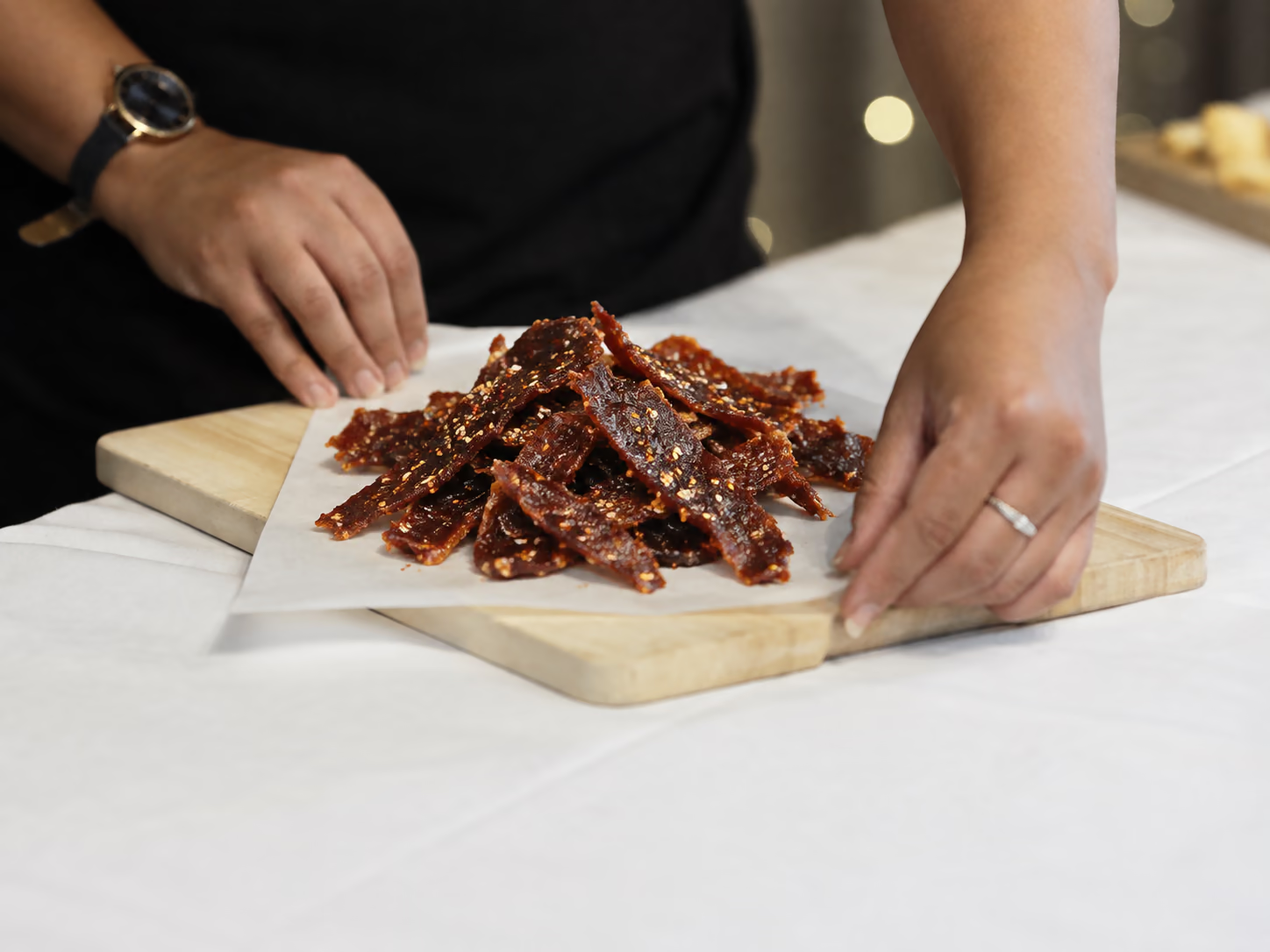
Good Taste Awards defines the serving state before the panel responds. The aim is to reveal the submitted product faithfully, not to improve it with a flattering recipe or presentation.
Category answers “what kind of product is this?”
Every accepted product has one main product category. The choice begins with ordinary consumption: what does the person believe they are eating or drinking, and which part of the experience dominates?
Ingredients alone do not settle the answer. A chocolate-coated biscuit may belong with bakery, while a chocolate confection containing a small biscuit element may belong with confectionery. Browse the category guides.
Product type supplies the practical detail
Within a broad category, the product type explains its form: liquid or set honey, still or sparkling water, filled or unfilled confectionery, dry pasta or a ready meal. This detail helps determine portioning, preparation and serving without creating a separate award scale.
Preparation follows ordinary use
The assessment uses a repeatable version of the way consumers normally experience the product. Information may include:
- storage and serving temperature;
- dilution, brewing or cooking method;
- resting, opening or aeration time;
- whether settling should be redistributed;
- the ratio of components in a multi-part product;
- the ordinary use of a neutral carrier;
- the time window in which the serving remains representative.
Retail instructions are followed where they define an ordinary and reproducible experience. A promotional serving designed only to impress the panel is not used.
Neutral carriers reveal rather than decorate
Some products are rarely consumed alone. A neutral carrier may be used after direct tasting or as part of the main serving where ordinary use requires it. The carrier is selected for low flavour and consistent preparation.
It cannot add sweetness, salt, richness, aroma or texture merely to make the product more appealing.
Portioning represents the whole product
Each assessor should receive a fair expression of the submitted product. Portioning therefore considers layers, coatings, fillings, inclusions, natural variation and the ratio of components.
A spoonful containing only sauce from a composite dish, one plain piece from a mixed snack or a broken shell without its filling would not represent the whole experience.
Temperature, carbonation, crispness, melting, thickening and aroma can change quickly. Preparation and service are coordinated so that assessors encounter the product within the same representative window.
If a service condition moves outside that window, the affected portion is not treated as though it represented the product fairly.
These methods control preparation, portioning, serving state and tasting order. Category pages identify the primary method and any valid alternatives for the submitted form.
GTA-GDE-MTH-201Ambient Direct Solid
Ready-to-eat solids are served in a stable ordinary condition as representative natural units or complete bites.
Used forPreserved, Pickled and Fermented Fruit and VegetablesHerbs, Spices, Salts and SeasoningsSnacks, Nuts, Seeds, Bars and Breakfast CerealsRice, Grains, Pasta, Noodles and PulsesCheese and Cheese-Style ProductsMeat, Poultry, Game, Eggs and Savoury Protein AlternativesFish, Shellfish, Seaweed and Marine FoodsPrepared Meals, Soups and Composite Dishes GTA-GDE-MTH-202Fresh Produce
Fresh produce is selected and divided through a balanced plan that controls ripeness, natural variation, and cut-surface change.
GTA-GDE-MTH-203Baked, Crumb and Laminated Structure
Baked products are portioned to preserve the relationship among crust, crumb, layers, filling, and surface elements.
GTA-GDE-MTH-204Crisp, Coated and Melt-Sensitive Pieces
Melt- and humidity-sensitive pieces are served in a condition that preserves their intended snap, melt, chew, aeration, or crunch.
GTA-GDE-MTH-205Viscous, Semi-Solid and Spreadable Product
Semi-solid products are served directly where meaningful and retain intentional layers, pieces, crystals, or separation unless ordinary use calls for mixing.
GTA-GDE-MTH-206Concentrated Seasoning and Defined Carrier
Concentrated products are expressed through a defined low-interference carrier, dilution, or cooked application that reflects ordinary use.
GTA-GDE-MTH-207Oil and Fat
Oils and fats are served in small defined portions at a state that reveals intended aroma, coating, melt, and finish.
GTA-GDE-MTH-208Brewed, Extracted or Reconstituted Drink
Prepared drinks use a recorded water, ratio, time, temperature, extraction, and service sequence.
GTA-GDE-MTH-209Still Non-Alcoholic Liquid
Still ready-to-drink liquids are conditioned, opened, poured, and served consistently without material preparation.
GTA-GDE-MTH-210Carbonated or Effervescent Liquid
Carbonated drinks are opened and poured in defined waves so gas level, volume, and headspace remain comparable.
GTA-GDE-MTH-211Fermented Alcoholic Drink
Fermented alcoholic drinks use defined temperature, opening, aeration, sediment handling, portion, and cumulative exposure.
GTA-GDE-MTH-212Distilled, High-Alcohol or Liqueur Drink
High-alcohol drinks use small consistent pours, defined dilution only where integral, and explicit exposure and recovery controls.
GTA-GDE-MTH-213Chilled, Frozen or Tempered Product
Temperature-sensitive products are served in timed waves at a defined temper, thaw, or melt state.
Used forCakes, Pastries and BiscuitsSnacks, Nuts, Seeds, Bars and Breakfast CerealsCheese and Cheese-Style ProductsMilk, Cultured Products and Dairy-Style ProductsChilled and Frozen DessertsOils, Fats and ButterMeat, Poultry, Game, Eggs and Savoury Protein AlternativesFish, Shellfish, Seaweed and Marine FoodsPrepared Meals, Soups and Composite Dishes GTA-GDE-MTH-214Cooked Single-Component Product
Single-component products are cooked or reheated through a defined endpoint and portioned across meaningful natural variation.
Used forFresh and Minimally Processed Fruit and VegetablesHerbs, Spices, Salts and SeasoningsBread, Flour and Baking MixesRice, Grains, Pasta, Noodles and PulsesSauces, Dressings, Condiments, Vinegars, Dips and Savoury SpreadsMeat, Poultry, Game, Eggs and Savoury Protein AlternativesFish, Shellfish, Seaweed and Marine Foods GTA-GDE-MTH-215Heated Composite Dish
Composite dishes are prepared and portioned so every assessor receives the intended relationship of their meaningful components.